Ready camp at Sandringham

I’ve been camping in earnest with my family for the past twelve years, almost entirely in the UK, yet this was to be our first camp at a Camping and Caravanning Club site. My camping taste runs to the wilder sites. Places where we can set a campfire or pitch in the heart of the woods. Camping and Caravanning Club sites are more established and run in accordance with the heritage of camping in this country: organised sites, no fires, immaculate lawns and quite involved etiquette involving showers and toilets.

But I’m open to softening my camping practice. These days, Cath and I both work. We live in London, and have to travel through the East London rush hour after the schools let out. Self-sufficient family camping takes prep. It takes time. And we don’t always have time. For me, this is where glamping or the Camping and Caravanning Club’s new offer of Ready Camp tents comes in: for the people who want to test out camping without buying the kit, or who can’t face all the hefting and carrying.
So, on a Friday night, I drove the family through Bank Holiday London traffic to the Norfolk coast and out to the Sandringham Camping and Caravanning site, a large clearing in the woods of the Queen’s estate, to try out their new Ready Camp. We took our sleeping bags, some pillows, towels and toothbrushes, clothes and a barbecue. For once, I was spared the rigmarole of loading the tent, camping chairs, crockery and beds into the car.

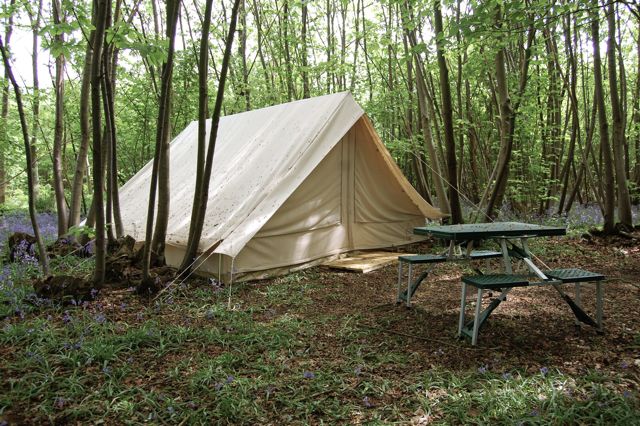
Ready Camp is pitched all ready and waiting for you. The tent is a large canvas safari tent made by Les Toiles Cabanon: the thick canvas means it stays cool and dark in a hot morning, and the poles are sturdy and metal. This gorgeous tent is pitched on decking, with an awning under which you can sit on your stoop, drinking beer, if you wish, or you can haul out the dining table and chairs that are provided to eat in the open. The covered balcony is a real bonus, even in the rain.
ready camp, sandringham
The kitchen is a two ring hob, microwave, and large trug for you to load the dishes in and take out to the washing area to clean, as there is no sink in the tent.
There were two bedrooms in our tent. One double bed for Cath and I, a canvas partition, then bunk beds for the children. Very comfortable, cool and dark. I wondered if my family might turn soft if they were exposed to any more of this glamping.

Last year, we camped in the Red Squirrel site in the Glencoe valley. Mid-March, snow on the mountains, deer sipping from the river next to the tent.

water in tent
When I struck camp, I discovered we’d been sleeping in a couple of inches of rainwater

The Dad of the only other family camping there was ex-military. I mention this so that you understand that I relish the intensity that comes with a wild camp. And so my caveats with Ready Camp come from this perspective:

Our camp at Red Squirrel in Glencoe.

In Sandringham the Ready Camp tents were pitched among the caravans. I’ve said this before in my book The Art of Camping. Camping and caravanning are like football and cricket, two very different activities that just happened to be played on grass. Part of the allure of glamping is that it is an easy way to get closer to nature. Caravan culture has diverged from that of campers. Diverged quite profoundly. The rest of my family holiday in caravans so I know what I’m talking about.

Ready Camp represents baby steps for the Camping and Caravanning Club as they attempt to reconcile their heritage with the emergent culture of glamping. It may be that they find a mainstream sweet spot for their offering. We had a great time there, the kids playing in the playground, and easy drives to the bracing Norfolk beaches and well-heeled villages. After all, the Abel & Cole veg box and daffodils in a water jug shabby chic of glamping is not for everyone. But I think they will need to find a way of roughing up their glamping pitches a little bit, either permitting fire pits or pointing them in the direction of the woods rather than the awnings of their neighbours.

We stayed at Ready Camp in Sandringham. Prices vary according to time of year and from site to site. We camped on the second Bank Holiday weekend of May and our stay would have cost £335 for three nights, or £264 for a midweek stay. Prices per night at Sandringham vary from £25 in low season up to £85 in high season. Our stay was courtesy of the Camping and Caravanning Club.

Glamping – at its most stateliest

You like the idea of camping, but your prefer a bit of posh? You want to go glamping. Still not posh enough? How about a glampsite within the grounds of one of the many stately homes that punctuate the country?
Luxury glamping bedroom in a Yurt
While there’s not usually a problem finding a normal campsite near any of our national treasures – and actually there are quite a few campsites set in the estates of historic homes: Longleat in Wiltshire, Stanford Hall in Leicestershire, Eastnor Castle in Herefordshire start the list rolling – actually staying under canvas within the grounds is a different matter altogether.
But glamping? That’s a whole different concept. Our stately homes may consider themselves too posh for camping, but the opportunities to glamp in their grounds are growing…

Some of our most to-notch country properties are offering posh camping (for example, in yurts) in their grounds. Here are just a few examples.

Kirklinton – for fun, food and faeries

Kirklinton Hall near Carlisle purchased its first yurt in time for the 2014 season. Locally, of course, because, as Kirklinton’s Alice Doyne puts it: “What we do at here is all about sustainable living and that includes sustainable holidaying.”

But, she adds: “That does not mean missing out on the Best Things in life. Our Motto is Fun, Food, Faeries – and Pigs!

“A yurt in the Orchard is the obvious answer. Zero impact camping but without the spartan drawbacks of a tent.” Hence, there’s full headroom, plus proper beds and furniture, a wooden floor with warm rugs, a wood-burning stove, sink and small cooker etc. And a proper lavatory in the adjacent buildings.
As Alice concludes: “In fact, it’s so cosy we’re tempted to move out of our draughty old 17th century house and live in the Yurt full time!

Also on offer is the chance to stay in the grounds in four-person tents, with the woodlands, swimming in the river and the Faerie Glen among the many attractions.
www.kirklintonhall.co.uk

Ghostly greetings at Layer Marney Tower

Some 120 acres of parkland and a Tudor building dating back over 500 years are what greets you at Layer Marney near Colchester in Essex.

While Layer Marney is claimed to be one of the UK’s most haunted houses, there’s also an exclusive glamping area with six placings, named after each of Henry VIII’s wives – Henry, as well as daughter Queen Elizabeth I, were visitors to Layer Marney.

“We decided to take a different approach four or five years ago,” explains Layer Marney’s current owner, Sheila Charrington. “It’s all about having a lot of fun. We attract two types: families with children of around ten years and couples who want to meet up with their friends for what we would call chilled weekends.”

Layer Marney’s glampers also have access to a large barn – perfect for family reunions, wedding receptions and the like.

The tents, likened to those used on the African plains by explorers in Queen Victoria’s time, come complete with everything up to a kitchen sink. You supply your own electricity – via a static bicycle!

Look out also for the Discovery Tent, equipped with telescope, field phones, a library of reference books, microscope etc.

Also popular here are the hot tubs – the perfect for way to relax after a day of activity.
www.layermarneytower.co.uk

Mannington Hall is a retreat from the coast

Ten miles from the North Norfolk coast, Mannington Hall – set in an Area of Outstanding Natural Beauty – is host to the Amber’s Bell Tents campsite, but you’ll also be able to make the most of all kinds of attractions within the grounds themselves – wildlife watching, over 50 species of trees, landscaped lakes etc – while the gardens are home to over 1,000 varieties of rose (see also www.manningtongardens.co.uk). There’s also the Greedy Goose tearoom, offering everything up to bespoke hampers and custom-made picnics.

Alternatively, drop by the honesty shop, pick up some nets and jam jars, and go pond dipping.

As for the bell tents, they’re some 5m in diameter nearly 4m high, with the cotton canvas experience extending to log burner, eco-friendly cotton bedding, lanterns, a fire bowl outside for cooking or just getting the campfire ambience. Suitable for up to four people in comfort, six maximum, and the rest of the site here offers showers, toilets etc, while the aforementioned honesty shop stocks everything up to firewood and candles. You can light your own camp fire, too, if you want.
www.ambersbelltents.co.uk

Bohemian Boconnoc is beautiful

Boconnoc glamping

It’s a Cornish dream here, with your chance to glamp it up in an ancient woodland setting.

The yurts here are not permanent fixtures. Instead, they’re ordered in specifically for each booking, via Hooe’s Yurts
.
The Boconnoc estate dates all the way back to Domesday while, apart from the house itself, there is both a church and an obelisk. It’s all tucked away down some two miles of private roads.

Owner Clare Fortescue says: “Once you arrive it as though you are somewhere timeless and the only sounds that can be heard are birdsong and the river running through the valley. Glamping at Boconnoc is set amongst sweeping parkland and we want guests to feel as though they have escaped from the busy world and arrived in their own private haven.
“Wake up to the sun rising through the ancient woodland, wander along the streams that meander through the valleys and enjoy champagne or some Cornish cider by the lake in the evening light.”

www.boconnoc.com

Warwick Castle – those summer, summer nights

Warwick Castle will have its very own glamping site this summer, with three super-luxury “King’s tents” among the latest offerings.

Yurt at Warwick Castle

Bookings her also give you two-day admission to the castle itself, also including evening entertainment, for example Have-a-go Archery and Jester’s School. There are also Communal Games Tents, while breakfasts in the Great Banqueting Hall tent are part of the glamping package (it’s extra for other meals).

A five-minute walk away from the castle, the Glamping Village actually hosts over 40 exclusively designed tents. Those top-of-the-pile King’s Tents include four-poster beds, thrones, oak storage chest, a large table with chessboard, even a suit of armour!

Warwick Castle itself celebrates its 1,100th birthday this year, and hosts all kinds of events throughout the year.
www.warwick-castle.com

Mettingham’s positively medieval moments
You’ll enjoy castle views from the medieval tents at Suffolk’s Mettingham Castle Lodge, where the glamping experience centres on medieval-style tents. Camp fires and barbecues are allowed here, too.

Choose between 10m x 10m Somerton (three people maximum) and 8m x 8m Dussindale (two adults, one child maximum) tents, each with wood-burning stove, outdoor table etc.

You can also wander through the 14 acres of grounds here and meet various animals.
www.pitchup.com

What to take

As glamping is the luxurious version of camping, you’ll be able to pack lighter, or use the extra space in your suitcase to bring more of your summer wardrobe. One consideration many neglect is insuring your belongings in the case of theft or damage. Check your other insurance policies to see if you’ll be covered – if not there are specialist camping insurance policies to give you extra peace of mind.

Find out more
Historic Houses Association
Featherdown Country Retreats
Pitchup

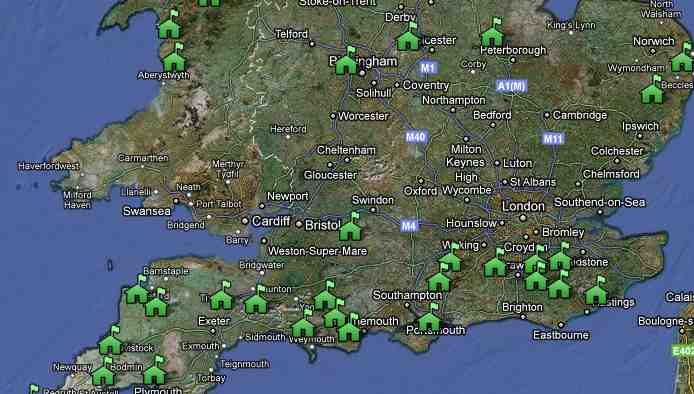
UK Campsites with campfires map

Looking for the best campsites in the UK? I’ve plotted a selection of recommendations from our own experiences on one big Google UK camping map, including campsites in England, Scotland and Wales. The flame symbol denotes UK campsites that allow campfires.

Campfires Not Jubilees

We arrive at a small deserted field at the dead end of a track, sloping gently down to a stream, just in time to pitch our tent in the last of the light. A woodpile of branches is set beside a campfire circle. The adjacent farmhouse is quiet, with a smattering of fowl. The decision to camp came late, about two hours before we set off. With the Hay Literature Festival ongoing, and a double Bank Holiday weekend to mark the Queen’s Diamond Jubilee, this small site was all we could find that fitted our criteria at such short notice.

Cath wearing a buff to repel midges
Cath is modelling a merino wool buff which is ideal for protecting the head from midges

Cwmnanthir campsite is situated in Banwen, to the south-east of the Brecon Beacons, where a range of wind turbines plunge into the valleys of waterfall country. I haul the tent out of the back of the car and begin pitching. The first peg penetrates the earth and releases the midges within; it blows the biters all up in my face and down my vest and into the yawning crack at the back of my trousers. Where is the Avon Skin So Soft? On the recommendation of the military, we use this moisturiser as midge repellent. When it mixes with the burly odours of a few days camping, the Avon Skin So Soft makes me smell like a transvestite down on their luck. I apply it too late. My forehead is braille.

Cath finishes off pitching the tent while I set a campfire as quickly as possible. The children remain in the car. Conditions are testing. I mean, we’ve only driven five hours in Bank Holiday traffic, barely keeping our temper through backseat provocations, a car sick lad, and a few wrong turnings. And now this. Hateful tiny insects. The fire chases them away. The children are put to bed. I open an eight pint jug of Harvey’s ale, fresh from the brewery. Cath sits down next to me wearing a buff to protect her head from the midges, and we exchange our first words since our arrival:
“That was my idea of hell,” she says.

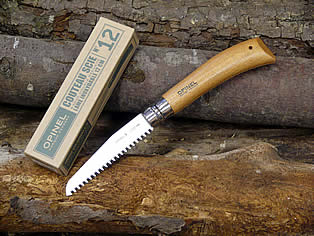
Soon others arrive, a trio of twentysomethings from Hackney who have come in search of waterfalls. They join us around the campfire. Together we sit up until past two in the morning, telling old Hackney stories and chopping wood. One of their party is a carpenter and becomes enamoured with my Opinel saw; it is a beautiful thing, cheap, efficient and classic: a symbol of French genius.

Opinel saw
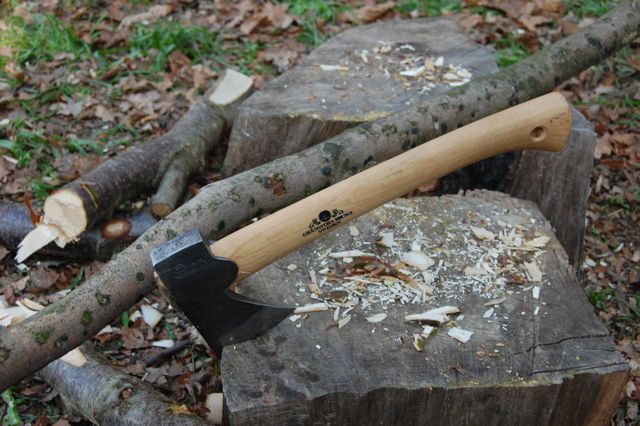
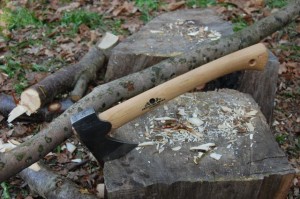
In his essay on the Opinel knife, Jean-Marie Floch describes it as “a secret hero”. I have a Gransfors Bruks hatchet for logs; lethally sharp and operated with a ostentatious swing, there is nothing secret about it. The way the Opinel saw folds out of its handle, is secured in place by a ring collar, and then discretely cuts through branches before slipping quietly back into my pocket confirms the truth of Floch’s observation.

The saw, the axe, and the beer jug are my loyal companions.
Gransfors Brucks hatchet
I share the jug around and we drink it dry. The moon shines brightly through the trees. When everyone is in bed, I walk back up the road to gaze southward over the beacons; the heads of the wind turbines are concealed in mist. The night shimmers with the unfamiliar, the incipiently strange. The stream burbles noisily by. Something moves nearby. I am not afraid.

The next morning, two other groups arrive; a couple from Wales who have a son each from a previous relationship, and an extended family from Golders Green. He is Syrian, she is Spanish. They have three children of their own, and then a couple of cousins they have taken in to spare them the horrors of the conflict in Syria, and a Spanish cousin who wants to learn English. The father has never been camping before and has brand new kit and an enormous Syrian shisha pipe – indistinguishable to my eyes from an Egyptian hookah.


“The way each camper confounds my gut prejudice makes me feel such joy”


Their children offer my children marshmallows and soon everyone is sitting around the campfire. The midges persist all weekend but this common hardship only bonds us all together; such a disparate collection of souls, Cath and I with our three children are the only conventional nuclear family on show. It is Jubilee Weekend, and in London, meaningless pagentry and sycophancy are offered as a symbol of the nation. I prefer the symbols of these campers and this campsite, an ad hoc unplanned bunch of people from South Africa, Cardiff, Syria, Bilbao and Liverpool who have come together to share an experience of the land and find a way to get along without rules or authority of any kind. A Royal Family? Really? Still?

The midges also stick around. Their persistence is exceptional, apparently. The site itself has a pair of perfectly decent toilets and a shower, a kitchen for campers to use, a bassett hound and a big grey-muzzled dog. There are argumentative geese and a pair of ducks living in a hutch that, on my first night, I mistake for a toilet and the birds never quite forgive me.

Our various children glom together into one group, play football during the day and hide-and-seek past midnight. We sit around the campfire and tell stories of home. The way each camper confounds my gut prejudice makes me feel such joy. I am released from the mean-spirited fear of others, and the weekend becomes, for me, an affirmation that what defines this nation is not the pomp of the homogenous few but the underlying decency of the diverse many.

Book a pitch at Cwmnanthir Camping

Four campsites in fiction

Four favourite camping spots in fiction

Handdrawn map of the perfect group camp map
‘Picnic Point’ in ‘Three Men in a Boat’ by Jerome K Jerome

A trio of liverish young men and their dog float up the Thames in a camping skiff. They finally pitch their tent at a spot called Picnic Point, near Runnymede, a very pleasant nook under a great elm tree. Yanking the hooped canvas over the boat almost defeats them, but the effort of camping is rewarded; they wake to a soft morning, the river in sunlight, and a view of timeless Englishness.

Mesquite country, Southwest Texas in ‘Freedom’ by Jonathan Franzen

Walter Berglund rejects the corporate way, and takes his young lover Lalitha camping. It’s been a hell of ride for Walter. This camp, filled with birdsong and empty of people, is a blissful interval between crisis and tragedy. Jonathan Franzen recently wrote of his own experiences camping alone on Selkirk Island (reputedly Crusoe’s island) to commemorate his friend and writer, David Foster Wallace.

Jackson’s Island, ‘The Adventures of Huckleberry Finn’ by Mark Twain

The densely wooded Jackson’s Island stands in the middle of the Mississippi River. Huck sets up camp here for three nights. He picks strawberries and green summer grapes, lands catfish and roasts them over a campfire. Islands are lonesome places; Huck smokes, counts the stars, and inspires generations of boys to follow him outdoors.

Swallowdale valley in ‘Swallowdale’ by Arthur Ransome

With their raft shipwrecked, the Swallows climb over a waterfall and discover the perfect valley campsite. With steep sheltering sides, a stream running through it, a pool for the washing up and a secret cave, the craggy landscape of Arthur Ransome’s Swallowdale offers handholds for the imagination of children and adults alike.

Five of our favourite campsites

A rainbow over Comrie Crieff campsite

Five campsites

Comrie Croft, Braincroft, Crieff, Perthshire PH7 4JZ

Campers are rightly afraid of Scotland’s voracious midge, but even in August I found the high meadow of this campsite, with a spectacular view of the surrounding glen, blissfully midge-free. Campfires are permitted, so I perfected the art of baking eggs, fresh from the site chickens, on a grill in foil parcels.

Gwalia Farm, Cemaes, Machynlleth, Powys, SY20 9PZ

If you like rough camping on a tiny campsite, then the overgrown Gwalia is an excellent cheap option, deep in the hills of mid-Wales. Consisting of a few pitches around the back of a B&B, and allowing campfires, Gwalia is a peaceful and amenable spot.

Forgewood, Sham Farm Road, Danegate, Nr Tunbridge Wells, Kent, TN3 9JD

Our first camp last year was at Forgewood, on the Eridge Park Estate. The estate is enormous, with a modest camping field surrounded by ancient woodland in which you can also camp. We pitched our tent in a glade and cooked venison stew – deer are hunted in the park – over the fire.

Grizedale Campsite, Bowkerstead Farm, Satterthwaite, Ulverston, Cumbria

A friendly, busy site near Grizedale Forest in the Lake District. There are no allocated pitches, and fires are allowed, but an order of sorts emerges and soon a low cloud of campsite smoke drifts over the fells.

Mannix Point in Caherciveen, Kerry

Located at the westernmost tip of the Ring of Kerry, on the outskirts of Caherciveen, campsite owner Mortimer has crafted some beautiful pitches from which you can watch the waters flow into Valentia Bay. There is a music room for ad-hoc singalongs and a campers’ kitchen, which really helps if it rains.

For more campsite recommendations, use our uk campsite map


Welsummer campsite

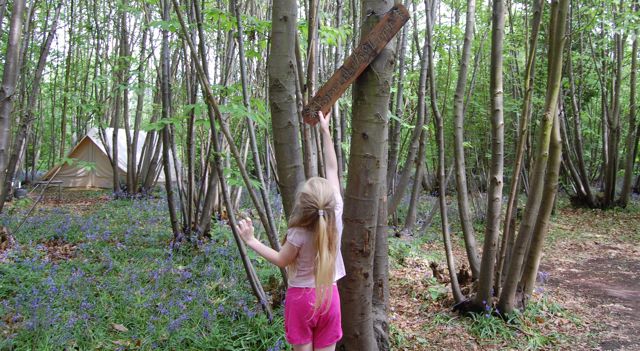
When Thomas Hiram Holding, the gentleman tailor who founded the Camping Club, wanted to camp, he knocked on a farmer’s door and agreed a price for a pitch. The Edwardian camper ranged far and wide and free over the land. That freedom was eroded as the state grew anxious about the impact of camping upon the English countryside. The 1936 Public Health Act contained the first national measures for the control of camping. Only one moveable dwelling – tent – was permitted per acre. Landowners required a licence from the local authority. Large licensed campsites contained the problem of mass tourism in the British countryside. This was the kind of camping I knew as a child, a tent pitched in a manicured internment camp, a suburb under canvas.Adjusting a sign in the woods at Welsummer campsite

The beginning of this century has seen a rehabilitation of the reputation of camping. There are demographic reasons for this – the rise of a new generation of campers with peak outdoors experiences at festivals – and economic reasons – a middle class adjusting to a decline in income by embracing the simple, cheap pleasure of sleeping under the stars. The culture wants an alternative to screen-based lives of work and play, and camping is one option. But not camping as it used to be.

[ad#Google Adsense-solid bar]

The tiny Welsummer campsite in Kent shows us how much camping has benefitted from shrinkage. It is a small site of twenty pitches set over two cosy meadows and a handful of rugged pitches in a dense wood. An hour and half’s cross-country drive from our home in Lewes, and within reach of a late evening dash from London, Welsummer campsite is run by Med and Laura Benaggoune, a couple in the early forties who lived together in France before returning to Laura’s home in Kent. Ridge tent in the woods of Welsummer campsite

Med and I share a cup of tea. “Where else in Europe you would encounter a site like Welsummer?” I ask. Italy? the Czech republic? The Netherlands? Certainly not in France. “This is not how the French camp,” says Med. “The campfires would be impossible” – dry Southern France is a tinderbox – “ and French campers expect a bar, a disco, a playground.” In other words, everything that the modern British camper eschews. But why have we turned our back on such facilities?

The formula is simple: the smaller the site, the fewer the rules, the greater the freedom. Welsummer has a minimum of signage: in a small site, a friendly word from the owner replaces a blizzard of forbidding notices. Cars must be parked in an adjacent field, which always makes a site more child-friendly and less like a car park. There is a family bathroom, a blessing for anyone who has ever tried to shower three small children in a cubicle, and pre-erected bell tents for metropolitan glampers, keen to dip a Converse galousher in the camping lifestyle. Everyone’s children glom together into a tribe and disappear into the woods. That’s all we ask of camping: freedom for the children, from the children.

Book Welsummer.

Matthew De Abaitua’s book The Art of Camping: The History and Practice of Sleeping Under the Stars is published by Hamish Hamilton in July. Order this new camping book from Amazon.

Forgewood campsite

To Forgewood campsite on the Eridge Park estate for our first camp of the year. We pitched in a small clearing within the borders of a wood. The tree surgeon had clipped back ominous overhead branches or ‘widowmakers’ as they are called by old woodsmen. Dappled light spread over bluebells and caterpillars; the woodland management is as much for the benefit of butterflies as it is for campers.
Child in the woods at Forgewood campsite
Thomas Hiram Holding, author of The Camper’s Handbook, warned campers away from woods and forests as, if overgrown, they can be damp, dark and infested places. None of these complaints apply to Forgewood. The wood insulated our camp from the pre-Easter chill, not a spot of rain fell over the long weekend, and when we struck camp the groundsheet was unexpectedly dry. The advantage of camping in a wood is a sense of privacy and enclosure, and a contemplative atmosphere.

A wood is also a church. A pagan church. The tall pines and beech make a vaulted ceiling, the light scattered by the leaves resembles the coloured patterns thrown by a stained glass window, and there is serenity standing amongst the cool indifference of trees. In this church, the campfire is the altar, the heart of our veneration.
The woods at Forgewood campsite
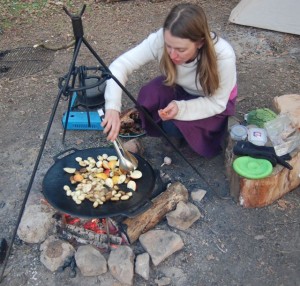
Over the winter, I had acquired more woodcraft gear with which to perfect my campfire craft: a Gränsfors Bruks hatchet, Opinel pocket saw and a Finnish muurikka. The hatchet and saw turned deadwood into kindling, and the campfire turned the muurikka into a sizzling skillet, a cross between a wok and a large frying pan set on three short legs providing maximum cooking area for minimum fuel to feed a hungry family.

Over the weekend, Cath cooked bacon and pancakes, pork chops, apples and gnocchi, and fried breakfast for five. Pancakes cooked in pork fat over the campfire then drizzled with maple syrup is a classic American dish that derives from the epicures of the American wilderness – the camp cookery of Horace Kephart of the Smoky Mountains or Nessmuk of the Adirondacks.

We did not explore much at Forgewood; rumours of ice caves and a ruined castle went unconfirmed. We took the two small children out for a woodland stroll and surprised a deer that bolted away with a flash of a white tail. Over three days, we barely left camp. Camp is a place of minor tasks, with wood to chop, food to prepare, children to dust down and local venison to stew. Rather than explore the woods, I appreciated them with a cup of tea in my hand: the birdsong that always sounds to me like a data stream; the fat atoms of blossom tumbling idly through the spokes of a pine tree; a game of rounders in the adjacent meadow, and boyish shouts of ‘out’, ‘out, ‘out’; a robin impudent on a branch; the distant rifle shots of a deer hunt: and then dusk; the tea in my mug replaced with beer; the meadow passive and misty as the sun set over it with such anger I was concerned for its blood pressure; in its place, an enormous yellow moon rose between coppiced trunks and spread reassuring bands of light across the meadow; estranged owls hooted late night booty calls and dark trees twitched their fibres – the wood seethed like a nervous system and I was drunk and alive – and then, at last, I called it a night, doused the campfire, and instantly vanished in a blow-out of steam, the clean scent of water vapour rushing around my face and into my nostrils like dry ice in a nightclub.

gransfors bruks hatchet
At Forgewood, woodland solitude is offset by a more sociable camp atmosphere in the meadows. A commitment to ‘real camping’ means no caravans and no electric hook ups, and adequate facilities. Forgewood is situated on part of the estate of the Marquess of Abergavenny. The question that I have been puzzling over – how could England offer more of the wild camping that Scotland enjoys by law – could find an answer in the aristocracy and other major landowners. The new generation of real campers are prepared to pay more for a nightly pitch than previous ones, yet expect less in the way of facilities. What we are looking for and paying for is a raw experience with campfires and clean running water. Some landowners and aristocrats have experimented with festivals as a way of making their land pay – but it takes considerable experience and patience to build a successful festival, as Peregrine and Catherine St Germans have proved at Port Eliot. The investment into a large woodland campsite seems less risky than the one big outlay of a festival; now that campers do not demand electrification and tarmac roads to all their pitches, is there an emerging business model in the cultural shift to campfire camping for big landowners?

For the rest of us, it’s unlikely that we could ever afford the sheer expanse of land required for a more solitary camping experience. The need to maximise the return on every mortgaged acre leads to the depressing car park campsite that is all too familiar in the UK. For landowners seeking to balance financial return with the status of a custodian of the countryside, the likes of Forgewood promise financial return without excessive development. Protecting the forests requires managed access: when people have the opportunity to experience these places, they become advocates for their preservation. As camping returns to the spirit of its origins, the camper – historically treated as a nuisance – could be the solution to investing in and protecting the nation’s woodland.

Gwalia Farm campsite

I discovered Gwalia Farm, a small campsite in Wales, through Tiny Campsites, Dixie Willis’ selection of campsites that are an acre or under in size. The farm is tucked away amongst the lower ranges of the eastern side of Snowdonia, not too far from Machynlleth, a Welsh market town with a progressive stripe. Cath and I grew up in Liverpool, and North Wales is the city’s psychedelic and spiritual retreat. Often, we would hear stories of an auntie or uncle who set the controls for the heart of the sun only to crashland on a welsh croft. The Centre for Alternative Technology, nine miles away from the farm, and its small community of sustainable living, crystallises the spirit of numerous experiments in living that have been conducted over the centuries in the Welsh valleys.Gwalia-Farm-campsite

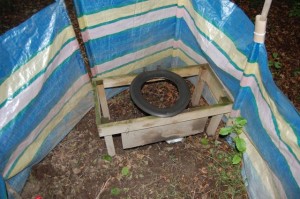
Gwalia Farm is a field around the back of a vegetarian bed and breakfast. Beside a narrow road, there is a rough shoulder where you park up and then trot a dozen yards down to a gate. Beyond the gate there is an overgrown field with half a dozen or so large pitches cut out of the long grass. There is gulley running across the field, a rivulet trickling through it, and after a quick scramble to the woods, there are the latrines – or “lats” as rough campers call them. Holes in the ground. There is a proper WC back at the bed and breakfast. Just past the wood, on the other side of a fence, a pond where some young lads foolishly camped.

gwalia-farm-campsite-facilities
"The lats". My mother would never have stood for this

I watched the gang of young men set their camp. They were no different than we had been all those years ago, compelled to come out into the country for some freedom and fire. Upon arriving, they discovered that the thirty-five-hour-a-week shifts they put in consuming entertainment media had in no way equipped them for camp. Never before had I witnessed an attempt to pitch a tent in a bog. Beside a wild pond surrounded by tall grass, they gallumphed around for fire wood, bringing back the greenest, dampest looking branches; I suspect they tried to light the wood directly with a zippo. A couple of hours later, they came to visit our camp, lured in by the smell of wood smoke and the leg of lamb roasting over the campfire.
“I don’t think we should have camped in a bog,” said one lad, shirtless and tattooed.
“The campfire’s not…” his friend hesitated.
“It’s not working.”
“You will need a campfire to keep away the insects,” Cath observed. “Because you’ll get a lot of midges and mosquitos near that pond.”
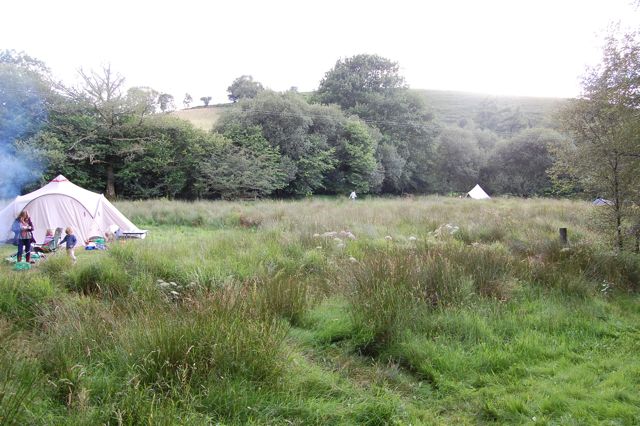
The view from Gwalia Farm campsite
Their disconsolate scratching was eloquent on this matter, even if they were not. Still, I understood how difficult it was to ask for help in setting a campfire, (not that they asked directly for help; the lads presented their wounds like a dog with an injured paw, and hoped that I would infer what was required.) It is embarrassing to admit that you cannot make fire, that the basic technology of humanity eludes you. I gave them a couple of firelighters, some dry wood and a smouldering log. As they loped back to their sinking, midge-ridden camp, I briefly entertained the fantasy of a network of sites like Gwalia Farm spread across the country, rough and ready glades where young people could learn to build Indian shelters, and set campfires, get out of bedrooms and the forecourts of late-night supermarkets to take risks in nature rather than the plastic risks of video games, a fantasy in which camping in Britain is dedicated to the call of the campfire.


View Campsites, campfires, UK in a larger map