Ready camp at Sandringham

I’ve been camping in earnest with my family for the past twelve years, almost entirely in the UK, yet this was to be our first camp at a Camping and Caravanning Club site. My camping taste runs to the wilder sites. Places where we can set a campfire or pitch in the heart of the woods. Camping and Caravanning Club sites are more established and run in accordance with the heritage of camping in this country: organised sites, no fires, immaculate lawns and quite involved etiquette involving showers and toilets.

But I’m open to softening my camping practice. These days, Cath and I both work. We live in London, and have to travel through the East London rush hour after the schools let out. Self-sufficient family camping takes prep. It takes time. And we don’t always have time. For me, this is where glamping or the Camping and Caravanning Club’s new offer of Ready Camp tents comes in: for the people who want to test out camping without buying the kit, or who can’t face all the hefting and carrying.
So, on a Friday night, I drove the family through Bank Holiday London traffic to the Norfolk coast and out to the Sandringham Camping and Caravanning site, a large clearing in the woods of the Queen’s estate, to try out their new Ready Camp. We took our sleeping bags, some pillows, towels and toothbrushes, clothes and a barbecue. For once, I was spared the rigmarole of loading the tent, camping chairs, crockery and beds into the car.

Ready Camp is pitched all ready and waiting for you. The tent is a large canvas safari tent made by Les Toiles Cabanon: the thick canvas means it stays cool and dark in a hot morning, and the poles are sturdy and metal. This gorgeous tent is pitched on decking, with an awning under which you can sit on your stoop, drinking beer, if you wish, or you can haul out the dining table and chairs that are provided to eat in the open. The covered balcony is a real bonus, even in the rain.
ready camp, sandringham
The kitchen is a two ring hob, microwave, and large trug for you to load the dishes in and take out to the washing area to clean, as there is no sink in the tent.
There were two bedrooms in our tent. One double bed for Cath and I, a canvas partition, then bunk beds for the children. Very comfortable, cool and dark. I wondered if my family might turn soft if they were exposed to any more of this glamping.

Last year, we camped in the Red Squirrel site in the Glencoe valley. Mid-March, snow on the mountains, deer sipping from the river next to the tent.

water in tent
When I struck camp, I discovered we’d been sleeping in a couple of inches of rainwater

The Dad of the only other family camping there was ex-military. I mention this so that you understand that I relish the intensity that comes with a wild camp. And so my caveats with Ready Camp come from this perspective:

Our camp at Red Squirrel in Glencoe.

In Sandringham the Ready Camp tents were pitched among the caravans. I’ve said this before in my book The Art of Camping. Camping and caravanning are like football and cricket, two very different activities that just happened to be played on grass. Part of the allure of glamping is that it is an easy way to get closer to nature. Caravan culture has diverged from that of campers. Diverged quite profoundly. The rest of my family holiday in caravans so I know what I’m talking about.

Ready Camp represents baby steps for the Camping and Caravanning Club as they attempt to reconcile their heritage with the emergent culture of glamping. It may be that they find a mainstream sweet spot for their offering. We had a great time there, the kids playing in the playground, and easy drives to the bracing Norfolk beaches and well-heeled villages. After all, the Abel & Cole veg box and daffodils in a water jug shabby chic of glamping is not for everyone. But I think they will need to find a way of roughing up their glamping pitches a little bit, either permitting fire pits or pointing them in the direction of the woods rather than the awnings of their neighbours.

We stayed at Ready Camp in Sandringham. Prices vary according to time of year and from site to site. We camped on the second Bank Holiday weekend of May and our stay would have cost £335 for three nights, or £264 for a midweek stay. Prices per night at Sandringham vary from £25 in low season up to £85 in high season. Our stay was courtesy of the Camping and Caravanning Club.

Top Turkish holidays in Dalaman

Found along the South West coast of Turkey, Dalaman has been attracting visitors since the ancient days. When you arrive, it is easy to see why. It’s a stunning Mediterranean resort and exemplifies perfectly why Turkey is fast becoming one of the best holiday destinations in the world.

In the ancient world, Dalaman was a regular hang out for gods like Apollo and Pegasus and while these may be myths it is easy to see why the gods might have chosen this place. These days it is also visited by around two million people a year, so the gods are far from alone!

The beaches are understandably the main draw – it’s also known as the Turquoise coast which should give you some idea as to what it is that appeals. Long stretches of beach, beautiful coves and bays make it a naturally stunning location. The resorts of Icmeler and Olu Deniz are always in demand and come complete with all the other facilities you would expect at a top resort.

Sarigerme is a relatively new resort but looks set to establish itself as one of the best in years to come.

If you are looking for a spot of history to enjoy then it doesn’t get much better than Ephesus. In its day, this was the second biggest city in the Roman Empire behind Rome itself. Today it is only ruins but still gives you some idea how majestic it must have been in its pomp.

Also well worth a visit is Marmaris – a town full of hustle and bustle. Pick up a bargain at the bazaar (be prepared to haggle) and see what goods are on offer Dalaman holidays from Thomas Cookon any given day.

Like most of the other resorts along Turkey’s Aegean Sea, the warm waters are ideal for swimming and having a go at other watersports. Every age is catered for, as is every budget so no matter what you are looking for, Dalaman is a great spot for a holiday.

Dalaman holidays with Thomas Cook let you take the very best from the region and enjoy a unique holiday in this unique and exquisite destination. If Turkey holidays are on your radar for your next holiday, then Dalaman should be at or near the top of your list.

Why not check it out for your next getaway?

Guest post from Thomas Cook

Campfires Not Jubilees

We arrive at a small deserted field at the dead end of a track, sloping gently down to a stream, just in time to pitch our tent in the last of the light. A woodpile of branches is set beside a campfire circle. The adjacent farmhouse is quiet, with a smattering of fowl. The decision to camp came late, about two hours before we set off. With the Hay Literature Festival ongoing, and a double Bank Holiday weekend to mark the Queen’s Diamond Jubilee, this small site was all we could find that fitted our criteria at such short notice.

Cath wearing a buff to repel midges
Cath is modelling a merino wool buff which is ideal for protecting the head from midges

Cwmnanthir campsite is situated in Banwen, to the south-east of the Brecon Beacons, where a range of wind turbines plunge into the valleys of waterfall country. I haul the tent out of the back of the car and begin pitching. The first peg penetrates the earth and releases the midges within; it blows the biters all up in my face and down my vest and into the yawning crack at the back of my trousers. Where is the Avon Skin So Soft? On the recommendation of the military, we use this moisturiser as midge repellent. When it mixes with the burly odours of a few days camping, the Avon Skin So Soft makes me smell like a transvestite down on their luck. I apply it too late. My forehead is braille.

Cath finishes off pitching the tent while I set a campfire as quickly as possible. The children remain in the car. Conditions are testing. I mean, we’ve only driven five hours in Bank Holiday traffic, barely keeping our temper through backseat provocations, a car sick lad, and a few wrong turnings. And now this. Hateful tiny insects. The fire chases them away. The children are put to bed. I open an eight pint jug of Harvey’s ale, fresh from the brewery. Cath sits down next to me wearing a buff to protect her head from the midges, and we exchange our first words since our arrival:
“That was my idea of hell,” she says.

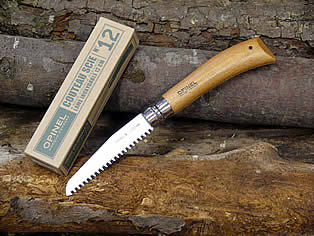
Soon others arrive, a trio of twentysomethings from Hackney who have come in search of waterfalls. They join us around the campfire. Together we sit up until past two in the morning, telling old Hackney stories and chopping wood. One of their party is a carpenter and becomes enamoured with my Opinel saw; it is a beautiful thing, cheap, efficient and classic: a symbol of French genius.

Opinel saw
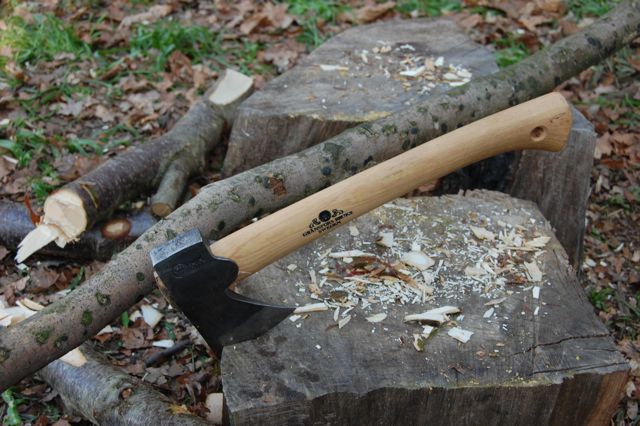
In his essay on the Opinel knife, Jean-Marie Floch describes it as “a secret hero”. I have a Gransfors Bruks hatchet for logs; lethally sharp and operated with a ostentatious swing, there is nothing secret about it. The way the Opinel saw folds out of its handle, is secured in place by a ring collar, and then discretely cuts through branches before slipping quietly back into my pocket confirms the truth of Floch’s observation.

The saw, the axe, and the beer jug are my loyal companions.
Gransfors Brucks hatchet
I share the jug around and we drink it dry. The moon shines brightly through the trees. When everyone is in bed, I walk back up the road to gaze southward over the beacons; the heads of the wind turbines are concealed in mist. The night shimmers with the unfamiliar, the incipiently strange. The stream burbles noisily by. Something moves nearby. I am not afraid.

The next morning, two other groups arrive; a couple from Wales who have a son each from a previous relationship, and an extended family from Golders Green. He is Syrian, she is Spanish. They have three children of their own, and then a couple of cousins they have taken in to spare them the horrors of the conflict in Syria, and a Spanish cousin who wants to learn English. The father has never been camping before and has brand new kit and an enormous Syrian shisha pipe – indistinguishable to my eyes from an Egyptian hookah.


“The way each camper confounds my gut prejudice makes me feel such joy”


Their children offer my children marshmallows and soon everyone is sitting around the campfire. The midges persist all weekend but this common hardship only bonds us all together; such a disparate collection of souls, Cath and I with our three children are the only conventional nuclear family on show. It is Jubilee Weekend, and in London, meaningless pagentry and sycophancy are offered as a symbol of the nation. I prefer the symbols of these campers and this campsite, an ad hoc unplanned bunch of people from South Africa, Cardiff, Syria, Bilbao and Liverpool who have come together to share an experience of the land and find a way to get along without rules or authority of any kind. A Royal Family? Really? Still?

The midges also stick around. Their persistence is exceptional, apparently. The site itself has a pair of perfectly decent toilets and a shower, a kitchen for campers to use, a bassett hound and a big grey-muzzled dog. There are argumentative geese and a pair of ducks living in a hutch that, on my first night, I mistake for a toilet and the birds never quite forgive me.

Our various children glom together into one group, play football during the day and hide-and-seek past midnight. We sit around the campfire and tell stories of home. The way each camper confounds my gut prejudice makes me feel such joy. I am released from the mean-spirited fear of others, and the weekend becomes, for me, an affirmation that what defines this nation is not the pomp of the homogenous few but the underlying decency of the diverse many.

Book a pitch at Cwmnanthir Camping

Four campsites in fiction

Four favourite camping spots in fiction

Handdrawn map of the perfect group camp map
‘Picnic Point’ in ‘Three Men in a Boat’ by Jerome K Jerome

A trio of liverish young men and their dog float up the Thames in a camping skiff. They finally pitch their tent at a spot called Picnic Point, near Runnymede, a very pleasant nook under a great elm tree. Yanking the hooped canvas over the boat almost defeats them, but the effort of camping is rewarded; they wake to a soft morning, the river in sunlight, and a view of timeless Englishness.

Mesquite country, Southwest Texas in ‘Freedom’ by Jonathan Franzen

Walter Berglund rejects the corporate way, and takes his young lover Lalitha camping. It’s been a hell of ride for Walter. This camp, filled with birdsong and empty of people, is a blissful interval between crisis and tragedy. Jonathan Franzen recently wrote of his own experiences camping alone on Selkirk Island (reputedly Crusoe’s island) to commemorate his friend and writer, David Foster Wallace.

Jackson’s Island, ‘The Adventures of Huckleberry Finn’ by Mark Twain

The densely wooded Jackson’s Island stands in the middle of the Mississippi River. Huck sets up camp here for three nights. He picks strawberries and green summer grapes, lands catfish and roasts them over a campfire. Islands are lonesome places; Huck smokes, counts the stars, and inspires generations of boys to follow him outdoors.

Swallowdale valley in ‘Swallowdale’ by Arthur Ransome

With their raft shipwrecked, the Swallows climb over a waterfall and discover the perfect valley campsite. With steep sheltering sides, a stream running through it, a pool for the washing up and a secret cave, the craggy landscape of Arthur Ransome’s Swallowdale offers handholds for the imagination of children and adults alike.

Camping Etiquette – the ten basics

Two children doing cheers with their drinks at Glastonbury Festival
  1. Children stay up later when they are camping but you should be calling them back by nine o’clock. We all need at least an hour without them before the next day’s parenting shift begins.
  2. If you feel a blazing row coming on, both parties should retire to the car, which is more sound-proofed.
  3. Before leaving a campsite, feel free to offer any open, perishable comestibles to your fellow campers. Often, I have been grateful for open bottles of milk, loaves, vegetables etc.
  4. Pitch the door of tent facing into the field so that you appear sociable.
  5. Amplified music is no longer acceptable at a campsite. It sounds tinny and warped outdoors and the bass always ruins someone’s evening. Bongos and acoustic guitars are less frowned upon, but don’t bring them within earshot of my tent.
  6. Tents do not afford aural privacy. The Bedouins have a saying: “we pitch our tents far apart so that our hearts may stay closer together.” Sex should be conducted in as near to silence as possible. Camping backstage at a festival, a musician friend of mine disturbed my sleep by conducting an elaborate menage a trois in his little pop tent. I didn’t mind being disturbed by the sex, so much as the interminable negotiation beforehand.
  7. In a group camp, bring one item for the amazement and pleasure of the group. It could be a tripod for cooking over a campfire, a hand axe for trimming logs, or a barrel containing fifty pints of real ale. Camping is inherently socialist. Bring things to share and enjoy being equal.
  8. Once you’ve unloaded, park your car away from your tent in the campsite car park. That one simple act will make it easier for every parent to give their children a little bit more freedom to roam.
  9. Ball games in adjacent empty fields, not among the tents. I am cooking here, and I’ve got small children running around – I don’t want your ball knocking scalding hot water and coals everywhere.
  10. When striking camp, leave no trace behind. Also, minimise the amount of waste you leave in the bins. Before leaving home, decant food into reusable plastic containers and old cake tins. It’s easier to pack and you are not leaving a landfill behind.

On sandals and socks

I was lying in my tent in the middle of a cold night when I received an urgent call from nature. I often camp in remote spots, seeking a connection with the land and respite from creditors. The call was urgent, and so I clambered over my sleeping wife, out of the inner tent and into the cold chamber under the flysheet.

I was wearing a thermal vest, long johns and thick hiking socks. To go outside, I would need footwear. In the corner of the tent, my boots – which require some lacing – and next to them, a pair of sandals. I gazed down at my stockinged feet, back at the sandals, and then at my sleeping wife:

Could I do it? Could I wear sandals and socks?

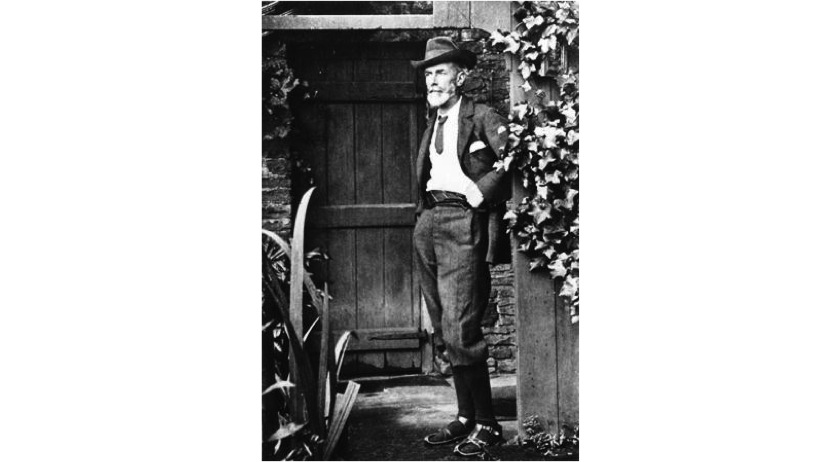
Edward Carpenter modelling his sandals with socks

Sandals and socks are reviled because they are a philosophical cop-out. The sock we associate with the shoe, with keeping one foot in the compromises and confinements of city life. The sandal yearns for the simple life, the toes wriggling free and tickled by spears of dewy meadow grass. To put a sock between the foot and the sandal is an ugly compromise.


Although Edward Carpenter could cast off the repressive expectations of Victorian society, he could never quite take off his socks

The shoe is a “leather prison” for the toes. So declared Edward Carpenter, a free-thinking socialist of the late Victorian period who was responsible for introducing the sandal into bohemian culture. A friend sent Carpenter two pairs of Kashmiri sandals from India, and he set about copying the design and distributing them to contemporary free-thinkers, in partnership with George Adams who he set up as sandal maker-in-chief.

Carpenter was gay, overtly so. His discretely circulated pamphlets did much to prepare the ground for what a same sex comradeship might be in the modern world. Born in Hove and educated at Cambridge, he set up home in Millthorpe in the countryside beyond industrial Sheffield, attracted both by the radical potential of the labour movement and by the sexual potential of the labourers. He met one such labourer, George Merrill, on a train. The two men enjoyed an open relationship, and Millthorpe became a site of pilgrimage for seekers of the simple life.


How would the spectacle of me in socks and sandals affect my wife?  The marriage would survive, but it is likely that her libido would not

Although Edward Carpenter could cast off the repressive expectations of Victorian society, he could never quite take off his socks. Photographs of the lean bearded “Saint in Sandals” show him wearing them with socks pulled up to the knee. Freedom was more important that the restrictions of style: he dispensed with waistcoats, underlinen and ties and wore instead a minimal outfit of woolly shirt, coat and pants. His sandals cost 10s 6d, less for children, and were a symbol of belonging to the progressive cause.

All these thoughts assailed me on that cold night in my tent. How would the spectacle of me in socks and sandals affect my wife? I wasn’t worried about the damage that it might do to our marriage. Our marriage has solid economic underpinnings, and there are children involved. The marriage would survive, but it is likely that her libido would not. I checked that she was soundly asleep, and then carefully slipped on the sandal.


Archeological analysis of fibres found on Roman sandals suggest that when the soldiers were in colder climes, such as Britain, the sandal was worn with socks

The sensation was obscene. The thickness of the sock caused the strap of the sandal to tighten indecently around the foot. The sandal was a Birkenstock, a German family company who made contoured shoes contemporaneous with Edward Carpenter’s sandal business. The German people are associated with the sandal and the sock combination, a Teutonic assertion of pragmatism over aesthetics. One wonders if they even remove their white ankle socks during intercourse.Birkenstocks did not get into sandals until 1965 during the American revival of the simple life or hippy movement.


The sandal was mankind’s first article of footwear. In the age of Homer, both sexes wore a wooden sole fastened to the foot by thongs. The Mogollon Indian in Southwest America plaited their sandals from the leaves of the Yucca tree. In Roman times, the sandalium worn by women was a sole with a piece of leather covering the toes and was worn mainly indoors. The soldiers of the Emperor wore the caliga, a heavy and high-laced boot that was open at the toe. Archeological analysis of fibres found on Roman sandals suggest that when the soldiers were in colder climes, such as Britain, the sandal was worn with socks.


Today the British army issue sandals that are man-made with velcro fastenings. Far more appealing than these are the Northwest Frontier Chaplis worn by the Indian army during campaigns in the 1930s; with two thick leather straps crossing a tongue, only the merest peep of the toes is visible, thereby sparing passersby the sight of your ten blind blunt-headed worms.
In my sandals and socks, I went out into the night to heed the call of nature. It was the moment before the moment before dawn, and the land seethed with anticipation. Carpenter and his sandals stand for the lost mystical socialism of Albion; a place where the working man and the high-minded type could join together to exceed the bounds of the acceptable and push away the deadening influence of mindless consumerism. This mystical socialism did not survive the Second World War. Sandal-wearing cranks were seen as an impediment to the credibility of socialism. George Orwell famously railed against “every fruit-juice drinker, nudist, sandal-wearer, sex-maniac… in England.”
In his essay On Sandals and Simplicity, GK Chesterton also took the sandal-wearers to task. He complained that advocates of the simple life would make us simple in the things that do not matter – diet, costume, etiquette – and complex in the things that do – philosophy and spirituality. The mystical socialist believed in plain living and high thinking. Chesterton, the scruffiest man in England, corpulent and windblown, sought the opposite: high living and plain thinking.
In my socks and sandals, I walked across the meadow to the witchy silhouettes of the copse, where I satisfied the masculine urge to urinate against the vertical. The black tops of the trees thrashed around in a bohemian dance. Grainy bands of indigo lay over the land. I felt the spirit of vitality move within me, the urge to cast off all clothing and to run amok as a natural animal. The wind goaded the tree tops into complete self abandonment. Would I join them?
No. Donning the sock and sandal was a transgression that threatened my very being! What next: speedos in the office? Trainers? The age of mysticism is past. I tromped back across the meadow, removed my sandals and cast them into the undergrowth. Never again would I be tempted by the comfortable compromise of the sock and sandal. From that night onward, my toes would serve out a life sentence in brogue and Brasher boot.

Camping with The Chap

The new issue of The Chap contains my article on the Edwardian camping scene and includes invaluable advice as to how a chap should camp (in tweed, a Gentleman’s Kevlar), coinciding with the forthcoming publication of The Art of Camping.
Cover of the new issue of The Chap featuring a gentleman in pith helmet and binoculars
The Chap also includes a brilliant article describing how to use the remnants of a hearty dinner to re-enact key battles in British history; in this issue, the Battle of Waterloo.

Vintage camping by the river

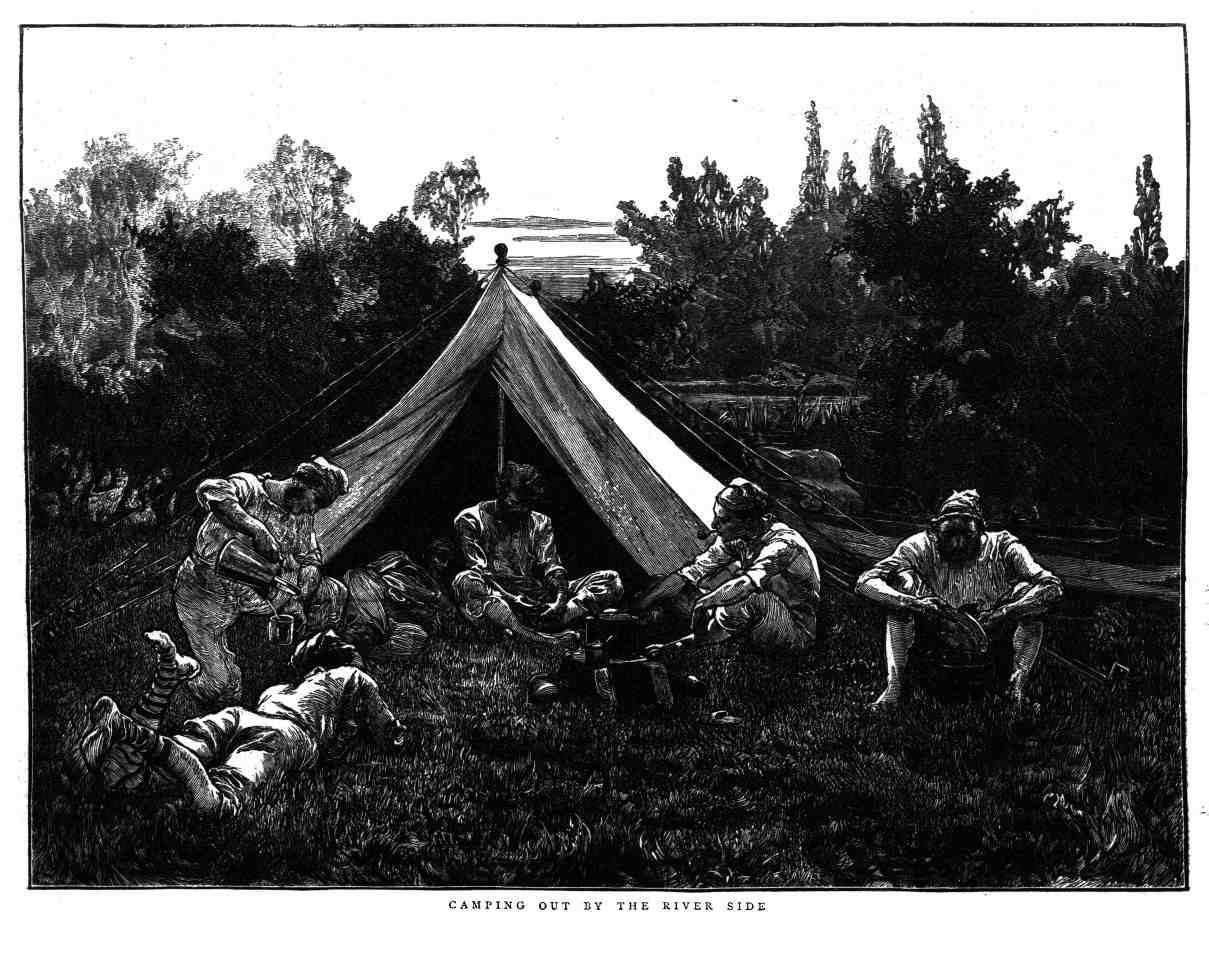
Camping out by the riverside 1873Five men camping beside a river. Perhaps six. A dixie on the fire, coffee from the pot, and one of them doing the washing up. Is that a sixth man leaning back in the shadow of the tent’s interior, or a bundle of rags. The men lie or sit on the ground, gazing down at their various tasks. Some are barefoot and all are wearing what appear, to my untrained eye, to be sleeping caps. The year is 1873 and we may just be spying upon breakfast at camp.

The Art of Camping

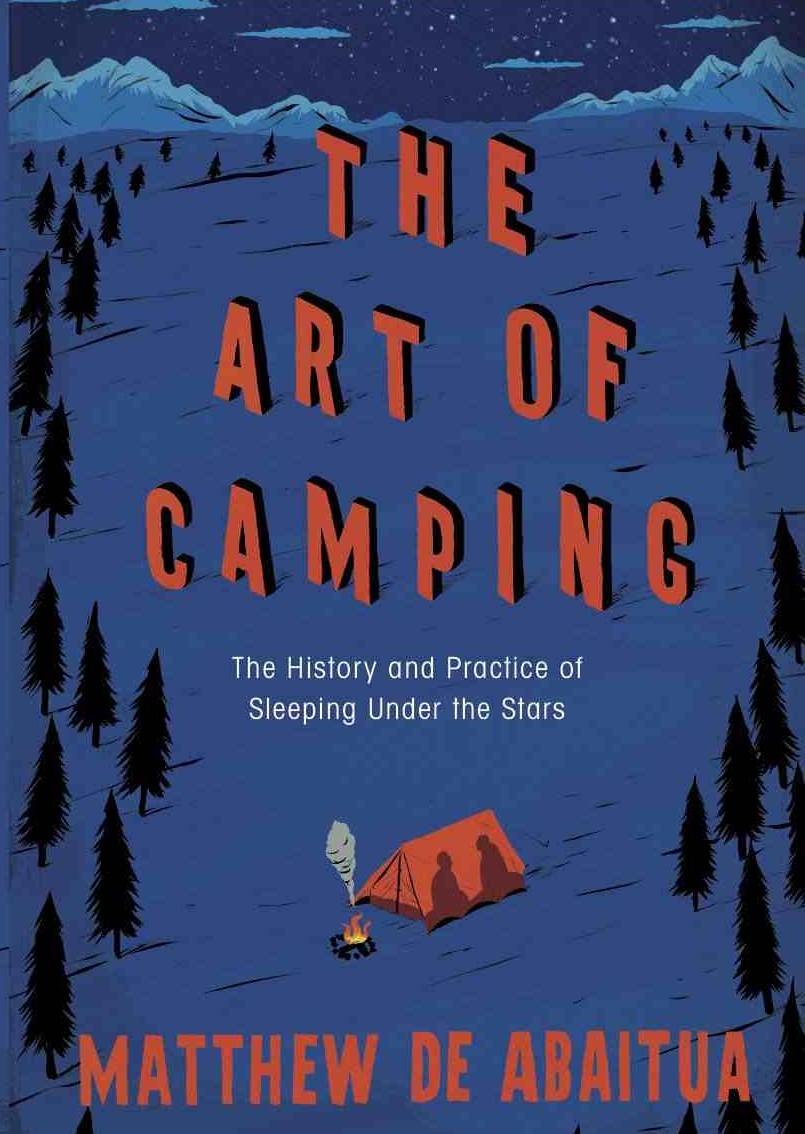
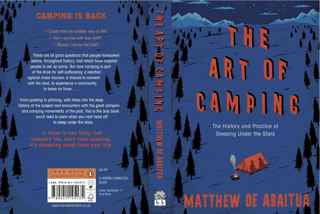
The manuscript for The Art of Camping: The History and Practice of Sleeping Under the Stars is with the proofreaders and publisher Hamish Hamilton has set 7 July 2011 as publication date. The camping book can be pre-ordered from Amazon.

The cover of The Art of Camping: The History and Practice of Sleeping Under the Stars by Matthew De Abaitua
The cover of The Art of Camping: The History and Practice of Sleeping Under the Stars by Matthew De Abaitua, published by Hamish Hamilton in Summer 2011